
Background to becoming a Volunteer to Leading Governance
My commitment to community welfare began in Nankana Sahib, where I witnessed everyday challenges such as poor sanitation, unmanaged waste, delayed public services, and environmental neglect. I realized these problems were often caused not only by limited resources but also by weak collaboration between citizens and public institutions. These experiences inspired me to contribute to practical, community-driven solutions. My academic journey further shaped this commitment. Studying Psychology at Forman Christian College strengthened my
understanding of human behaviour, leadership, and community dynamics, while Journalism and Political Science deepened my appreciation of communication, governance, and civic engagement. I am currently pursuing studies in Environmental Law and Policy to better understand how legal frameworks and sustainable public policy can support community development.
These experiences taught me that community welfare extends far beyond providing assistance. Sustainable development requires strong institutions, evidence-based policymaking, responsible leadership, and active citizen participation. Throughout my journey, I have been inspired by mentors, volunteers, teachers, and colleagues who demonstrated that lasting social change begins when individuals take responsibility for improving their communities. Serving as District Admin of Volunteers Leading Governance (VLG) allowed me to translate these principles into action. My responsibilities included coordinating volunteers, responding to public complaints, liaising with government departments, and strengthening collaboration between communities and public
institutions. Rather than viewing welfare as the sole responsibility of the government, VLG encouraged citizens to become active partners in solving local problems.
This role taught me that effective leadership is built on listening, accountability, timely decision-
making, and partnership. Volunteer organizations can play a vital role by bridging the gap between communities and government- mobilizing volunteers, documenting public concerns, facilitating communication, and promoting constructive civic engagement. The most rewarding aspect of this work was witnessing how collective action could create meaningful change. Whether organizing cleanliness campaigns, resolving community complaints, or collaborating with government officials, I repeatedly saw citizens, volunteers, educational institutions, and public authorities working together to improve community wellbeing.
Community Development and Volunteer Work in Action
During my tenure, VLG focused on improving environmental health, sanitation, and public wellbeing across District Nankana Sahib. One of our most significant initiatives was establishing a community complaint management system that enabled residents to report issues such as blocked drains, damaged roads, poor sanitation, and waste accumulation. Volunteers coordinated closely with the District Council, Local Government Department, Municipal Committees, and other relevant authorities to ensure timely action. Over time, our work expanded to more than 200 villages and towns. We organized large-scale cleanliness campaigns, removed waste,
improved sanitation, and promoted healthier public spaces. We also partnered with Government Girls Colleges and Government Schools to create cleaner learning environments while encouraging environmental responsibility among young people.
While these visible improvements were important, I believe our greatest achievement was rebuilding trust between citizens and public institutions. By encouraging communities to report concerns and supporting government agencies in responding effectively, we demonstrated that collaborative governance can deliver meaningful and sustainable improvements.
A Personal Philosophy of Welfare
My experience with VLG fundamentally changed my understanding of community welfare. I once believed that helping communities primarily meant addressing immediate needs. Today, I believe genuine welfare is about empowering people to become active partners in development, strengthening institutions, promoting responsible citizenship, and creating systems that continue to benefit communities long after individual projects have ended.
I also learned that prevention is more effective than responding after problems arise. Our environmental awareness campaigns showed that educating communities about sanitation, hygiene, and environmental responsibility can reduce health risks before they become serious. These experiences continue to shape my professional aspirations, reinforcing my commitment to research, governance, evidence-based policymaking, and community engagement in support of Pakistan’s sustainable development.
Some Challenges and Lessons for the Future of Volunteer Welfare Work
Working across more than 200 villages and towns in District Nankana Sahib gave me a deeper understanding of the complex realities of community welfare in Pakistan. I learned that social challenges are rarely caused by a single issue; rather, they reflect the combined effects of limited public awareness, economic constraints, institutional capacity, cultural attitudes, and administrative barriers.
One of the greatest challenges was encouraging communities to recognize their shared responsibility for sanitation, environmental protection, and civic wellbeing. Many people viewed these issues solely as the responsibility of government. Our experience showed that lasting improvements occur only when citizens actively participate alongside public institutions. Public education and sustained community engagement were therefore as important as infrastructure and service delivery.
Institutional limitations also affected welfare initiatives. Local government departments often worked with limited staff, equipment, and financial resources, while political and administrativechanges sometimes disrupted ongoing programs. These experiences reinforced the importance of maintaining politically neutral volunteer organizations that work constructively with all stakeholders while keeping community welfare at the center of their efforts.
Another challenge was sustaining volunteer engagement. Most volunteers balanced community service with their studies, employment, and family responsibilities. Their continued commitment depended on effective leadership, recognition, organizational support, and opportunities for personal development. I also learned that volunteers require practical training in communication, teamwork, ethics, conflict resolution, and community engagement to maximise their impact.
Complexities of Accessing Vulnerable Communities
Our work highlighted the inequalities faced by vulnerable and underserved populations. Many rural communities struggled to access basic services because of geographical isolation, poor infrastructure, and poverty. Long distances to government offices often discouraged residents from reporting problems, allowing local issues to persist. Women and girls faced additional barriers. Through our work with Government Girls Colleges and Government Schools, we recognized the importance of providing safe, clean, and healthy educational environments while ensuring that women are meaningfully represented in community decision-making. We also
recognized the need to better include persons with disabilities, older adults, daily wage workers, and religious minorities so that welfare initiatives respond to the needs of all members of society.
The Importance of Partnerships
Perhaps the greatest lesson I learned at VLG was that sustainable community development depends on collaboration. Volunteer organisations cannot succeed in isolation; they require strong partnerships with government institutions, educational organisations, civil society, and local communities. Throughout our work, we collaborated closely with the Local Government Department, District Council Nankana Sahib, Municipal Committees, the Deputy Commissioner’s Office, Assistant Commissioners, and other district authorities. These partnerships enabled us to organize sanitation campaigns, improve environmental hygiene, respond to community complaints, and deliver services more effectively.
Educational institutions became equally valuable partners. Beyond improving sanitation in Government Girls Colleges and Government Schools, we promoted environmental awareness, volunteerism, civic responsibility, and leadership among young people. At the community level, local residents remained central to every initiative. Their willingness to identify problems, work alongside volunteers, and engage with government agencies made our projects more sustainable and strengthened public trust.
Leadership, Sustainability, and Good Governance
Leading a volunteer organization taught me that its greatest strength lies in its people. Effective leadership requires clear communication, accountability, transparency, integrity, and a shared commitment to public service. These values not only strengthen volunteer organisations but also build lasting trust with communities and government institutions.
Although VLG operated with limited financial resources, careful planning, close institutional collaboration, and efficient use of available resources enabled us to deliver meaningful results. However, long-term sustainability requires more than financial support. Leadership succession, volunteer development, organizational learning, and proper documentation are essential to ensure continuity as volunteers move on to new opportunities.
I also believe digital technologies offer significant opportunities to strengthen grassroots governance. Digital complaint management systems, volunteer coordination platforms, monitoring tools, and transparent impact reporting can improve efficiency, accountability, organizational learning, and public confidence.
Ultimately, my experience demonstrated that sustainable welfare development depends on responsible leadership, transparent governance, continuous capacity building, strong partnerships, evidence-based decision-making, and active citizen participation. These principles remain central to my understanding of effective community development and public service.
Future Priorities and Reflections
My experience with Volunteers Leading Governance (VLG) has convinced me that Pakistan has tremendous potential to strengthen community welfare through innovation, research, technology, and collaboration. Volunteers remain one of the country’s greatest assets, but their impact can be significantly enhanced through stronger institutional partnerships and evidence-based policymaking. Digital technologies present an important opportunity to improve communication between citizens, volunteer organisations, and government departments. Integrated complaint management systems, online reporting platforms, and digital monitoring tools can make public services more transparent, responsive, and accountable while strengthening public trust.
Educational institutions also have a critical role in developing future civic leaders. Schools, colleges, and universities should actively promote volunteerism, environmental stewardship, responsible citizenship, and community engagement alongside academic learning. Equally important is the integration of research into welfare planning. Collaboration between universities, government agencies, civil society organisations, and local communities can generate the evidence needed to design more effective, equitable, and sustainable policies. The private sector can further contribute through corporate social responsibility initiatives that support environmental protection, education, volunteer programs, and community infrastructure. Such partnerships expand available resources while reinforcing the shared responsibility for community wellbeing.
Based on my experience, I believe several priorities are essential for strengthening welfare development in Pakistan. First, partnerships between government institutions and volunteer organisations should be institutionalized to combine community knowledge with public-sector expertise and resources. Second, investment in transparent digital complaint management systems can improve service delivery and accountability. Third, greater emphasis should be placed on community education and behavioral change, particularly in sanitation, hygiene, and environmental responsibility, where prevention consistently proves more effective than responding to problems after they arise. Finally, young people should be provided with meaningful opportunities to participate in governance, volunteerism, and public service, while public policies should be guided by continuous research, monitoring, and evaluation.
Looking back, my experience with VLG transformed my understanding of community welfare. I came to realise that sustainable development cannot be achieved by governments or volunteer organisations working independently. Lasting progress requires collaboration among citizens, educational institutions, civil society, researchers, the private sector, and public authorities, all working towards shared goals.
Perhaps the most important lesson I learned is that communities should never be viewed merely as recipients of services. When people participate in identifying problems, developing solutions, and monitoring progress, welfare initiatives become more effective, inclusive, and sustainable. Our partnerships with government departments demonstrated that collaboration strengthens public trust and enables institutions to respond more effectively to local needs.
I also became convinced that prevention is one of the most powerful tools for community development. Environmental awareness, public education, and responsible citizenship can reduce many health and sanitation challenges before they arise, creating healthier communities while reducing pressure on public institutions. At the same time, young people should be recognised as active partners in national development. Throughout my experience, I witnessed how motivated volunteers could mobilise communities, strengthen relationships between citizens and government, and develop innovative solutions to local challenges.
Serving the people of Nankana Sahib has been one of the most meaningful experiences of my life. It reinforced my commitment to public service and strengthened my belief that sustainable welfare depends not only on financial resources but also on transparency, integrity, responsible leadership, strong partnerships, and active citizen participation. I remain committed to contributing to Pakistan through research, governance, and community development, and to promoting welfare initiatives that are inclusive, evidence-based, and guided by the principles of social justice and sustainable development.
To read more about Volunteers Leading Governance:
District Nankana Sahib Welfare Activities
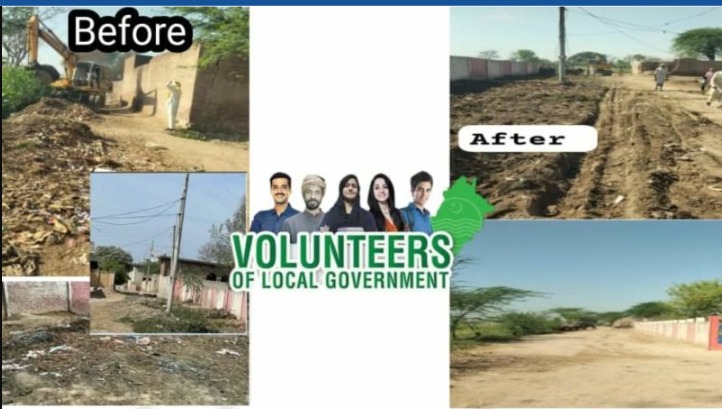
A volunteer-led sanitation campaign organized to promote environmental hygiene and public health
awareness within the local community. Through collective action and community participation, the
initiative encouraged cleaner surroundings, strengthened civic responsibility, and supported healthier living environments.
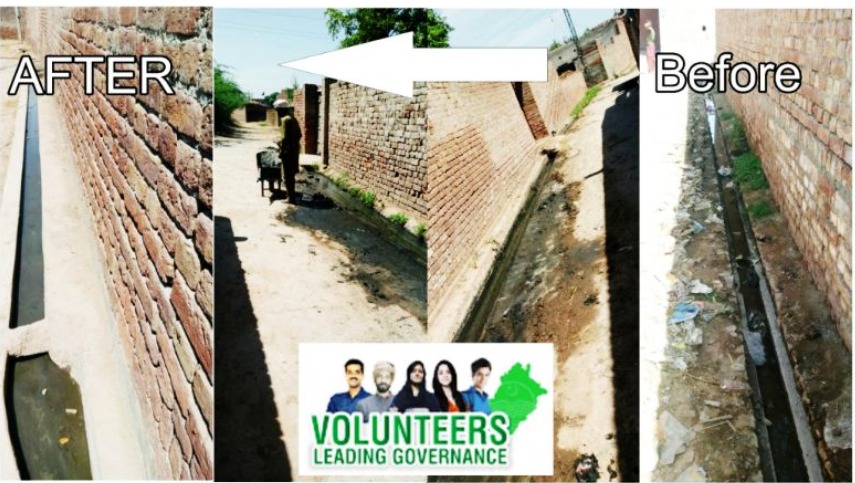
Community volunteers participated in an organized cleanliness drive to improve environmental conditions and reinforce the importance of shared responsibility for maintaining clean public spaces. The activity promoted environmental stewardship and highlighted the role of volunteerism in community welfare.
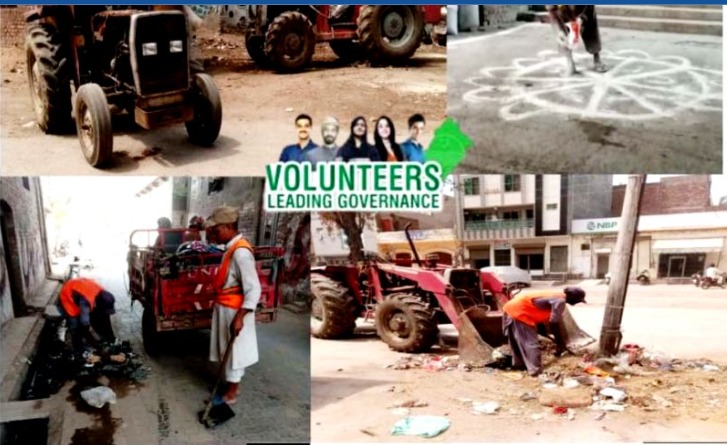
Volunteers collaborated with community members to improve environmental hygiene through coordinated sanitation activities. The initiative encouraged behavioural change, strengthened community participation, and demonstrated the value of grassroots volunteer efforts in promoting public well-being.
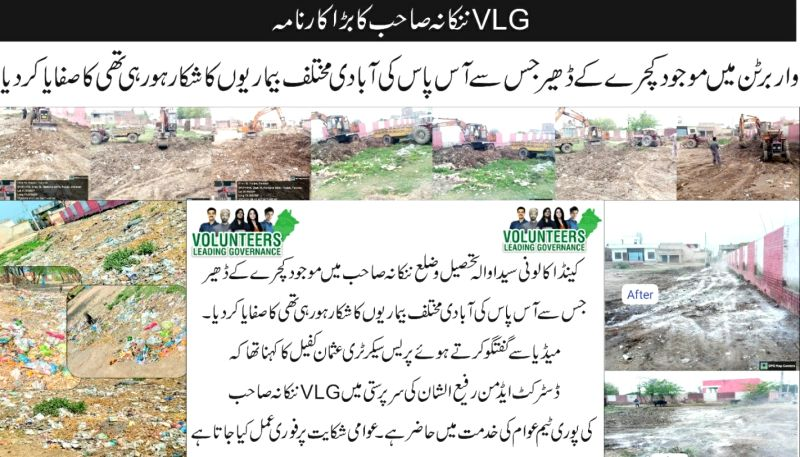
Community Environmental Stewardship Campaign
A community-led environmental stewardship campaign focused on promoting cleaner public spaces and encouraging responsible environmental practices. The initiative fostered cooperation among volunteers
and residents while reinforcing the importance of sustainable community participation in local welfare
efforts.