From Inclusion in Sports to Independent Living
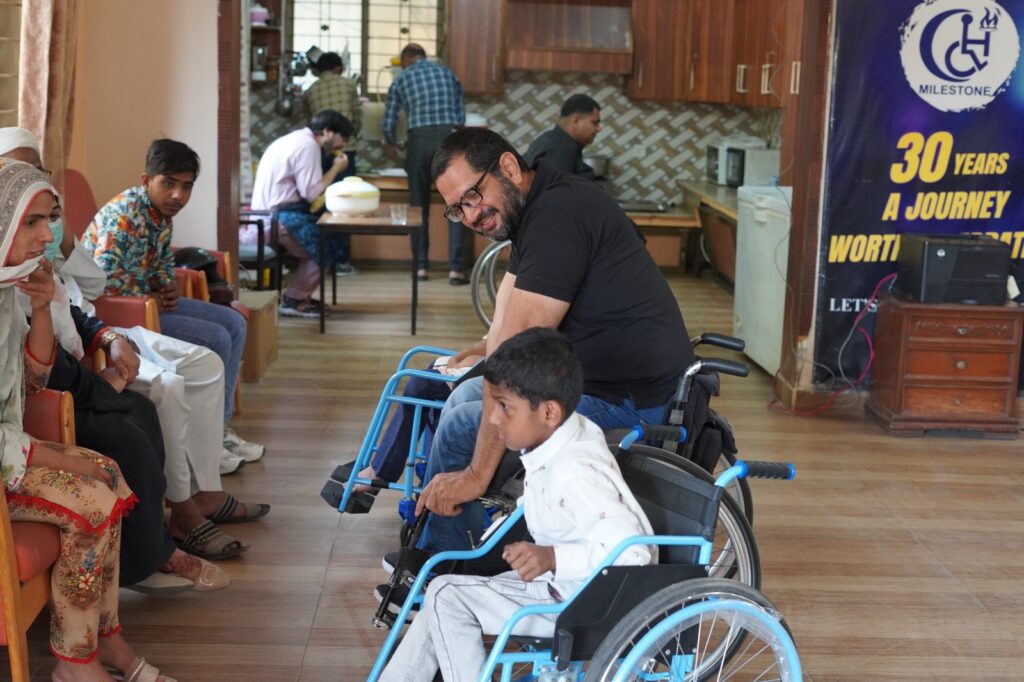
I began my welfare work in 1993, when I was only 16 or 17 years old. At that time, Milestone’s office was in front of the Tyrant Library, Lahore, and we started our work in the garden. For the first nine years, we lived and worked there, despite the financial difficulties. Our initial objective was simple but radical- persons with disabilities in Pakistan should be included in sports activities! We did not want disability to be treated as a reason for exclusion from sports. Instead, we began developing our own games and adapting existing sports according to people’s differences- not their “perceived limitations”.
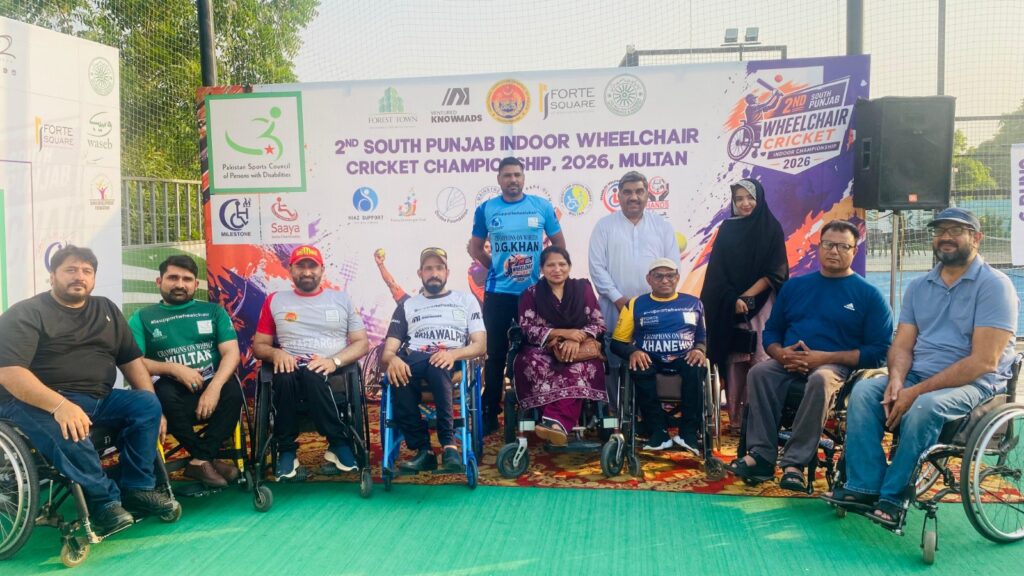
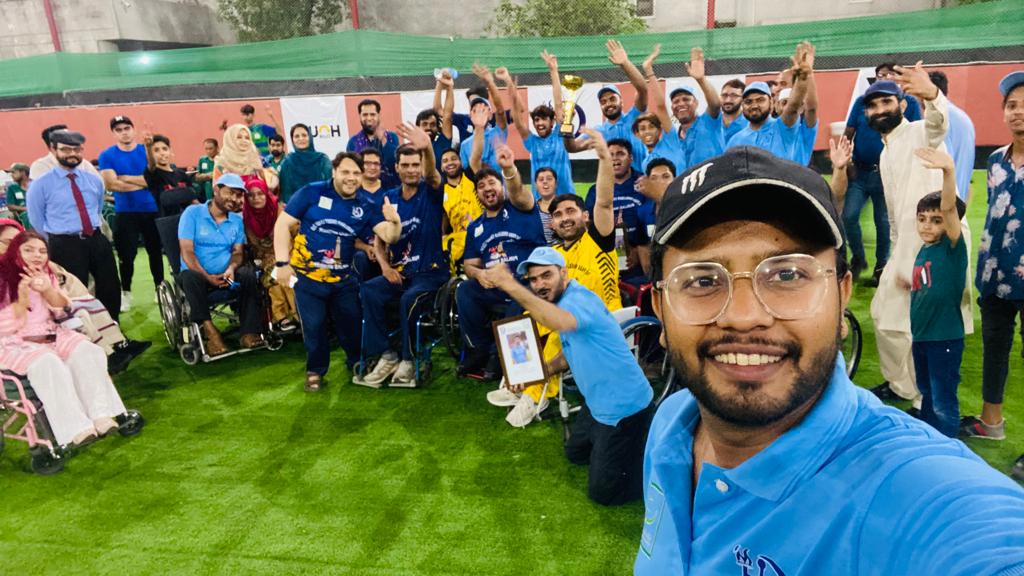
One of the first ideas I introduced was wheelchair cricket. I initiated the concept of playing cricket while sitting in a wheelchair. At that time, people did not appreciate the idea. Even members of the wheelchair-using community told me it was impossible: “How will you field? How will you bowl?” But I believed it could be done. In 2003, I introduced wheelchair cricket internationally. We initially organized sporting activities in Abbottabad city and then began holding tournaments in different cities across Pakistan. In 2010, I took the concept to India, and subsequently wheelchair cricket was played in Bangladesh and many other countries. The result was much bigger than a sport. The visibility of persons with disabilities increased, and wheelchair sports became more recognized. Today, wheelchair cricket has become self-sustaining, with cricket councils established in different countries, including Pakistan.
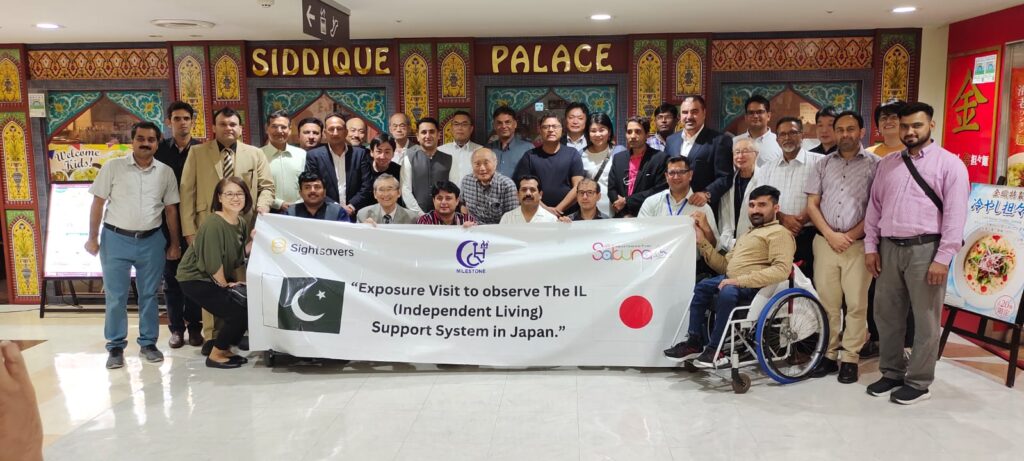
Around 2004-2005, I shifted my focus towards another important need for people with special needs- independent living! The independent-living movement had developed in Japan, South Korea, and other parts of Asia, and I wanted to bring this approach to Pakistan. Independent living means that a person should be able to live life according to their own choices, make their own decisions, and take responsibility for their own lives- whether they are paralyzed, unable to see, unable to hear, or have intellectual differences. Their circumstances do not remove their dignity or their right to make decisions.
One important mechanism is the personal-assistance service. We all use forms of assistance in our everyday lives. We may have someone drive us, iron our clothes, or help us with other tasks. Why should assistance provided to a person with a disability be viewed differently? By professionalizing personal assistance, we can enable people with disabilities to live independently. I began taking this concept to different parts of Pakistan. I worked in large and populated cities like Karachi, Skardu, Gilgit, Chitral, Multan, and other cities. Gradually, the concept spread across the country. Alhamdulillah (Praise be to God), Milestone Society for Special Persons is now operating on its own, and people who once could not imagine how to live independently are now teaching others how to do so. Thousands of people have become more independent, and more than 100,000 people have acquired visas through these efforts.
These two initiatives- sports inclusion and independent living- have now become sustainable movements.
Moving to a Society Designed for Everyone
A third concept that I initiated was a challenge to the way disability itself is understood. Across Europe, America, the UK and many other countries, people have traditionally been divided into categories- physically disabled, mentally disabled, hearing-impaired, visually impaired, and so on. These categories become labels attached to people.
I proposed something different- instead of labelling people, we should label and develop services. I believe there are essentially two things that determine whether a person becomes disabled in society- mobility and communication! If you take mobility away from a person, or take communication away from them, they become disabled in the social environment. But if you provide appropriate mobility devices and services, the disability can be reduced or removed from their everyday functioning.
For example, if a person with paralysis receives an appropriate mobility device, their ability to move and participate can be restored. Similarly, whether someone is blind, deaf or has an intellectual disability, appropriate communication services, technology, and human support can enable participation. Therefore, the person is not the problem; the absence of appropriate services is the problem!
This is also consistent with my understanding of religion. Allah is the Creator, and I do not believe that human beings have the authority to label one another as inferior or defective. We label products, but we should not label human beings. I believe the ideas we initiated are now spreading internationally and increasingly being understood. We spent years and considerable resources challenging a system in which people are categorized, sold services, and often made dependent on others. InshaAllah (God Willing) this approach can eventually transform that society and systems to ensure inclusion for all.
My fourth initiative is the one I have recently started, and I believe it may be the last major initiative of my life. I am working to build a social-service infrastructure that can bring people with severe physical disabilities- people who may spend their days at home or in bed looking at the ceiling- into the economy and community. I have already piloted this approach with families, and Alhamdulillah, the pilot has been successful. The next step is to take the model to government institutions and encourage them to use social-welfare funds to support it. I also want NGOs to adopt the family-based model so that people with severe disabilities can live with dignity while their families can also receive financial support. The pilot has been completed, and I am now completing the research.
Ownership, Dignity and Self-Reliance for Special Needs People
People often ask me where these ideas come from. They are not necessarily ideas that I found written in books. My understanding of disability began in childhood. I never felt ashamed of myself. People may look at my polio-affected feet and think they are crooked, but I have always found them beautiful. I still do. In fact, I sometimes joke that my feet are softer and more beautiful than my wife’s- they simply do not move. What I am describing is “ownership of oneself”! I think perhaps my mother planted this sense of ownership and self-worth in me. I cannot insult myself, and I cannot spend my life looking for faults in myself. This is not simply a psychological explanation- it is a sense of ownership.
Later, when I read the translation of the Holy Quran, I found verses that reinforced this understanding. I realized that, by Allah’s will and guidance, I had been moving in this direction since childhood. The problem, therefore, is not within the person- The problem is society- its attitudes, its assumptions and its lack of services. People label one another- your nose is too big, your nose is too small, you are black, you are white, your eyes are this way or that way. This is ignorance. Human beings do not have the mandate to label one another in this manner.
Once a person develops ownership of themselves, they can begin to invent, create and solve problems. When a person spends their life simply listening to everyone else and accepting society’s definition of them or their negative labels, they cannot innovate or develop self-worth. But when a person is close to Allah and respects themselves as creations of God, learning to love themselves from within, possibilities open up, and lead to a more fruitful life. I do not say this only as a religious idea- I also see it as a scientific and human process. When there is inner ownership and self-worth, creativity emerges.
I have travelled extensively and worked in more than 50 countries. Even in my own travels, I have learned that- it is not necessary to walk- it is necessary to reach your destination! If I think I cannot walk because I cannot use my feet, I could say that even a donkey walks on its feet- so what is the difference? I have to find another way to reach where I need to go. This is the philosophy of independent living- we should not organize life around what a person cannot do; we should organize society around what enables that person to participate in society.
From Personal Struggle to Building a Sustainable Welfare Movement
I come from a middle-class family. My family has roots in a Mughal family that was very wealthy in pre-partition India. When they migrated to Pakistan, they left their documents behind and started again from zero. My grandfather, Muhammad Rafiq Mirza, began farming from nothing. He was a major figure in education, and the initial educational policy for Pakistan was also written by him. He lived and worked alongside Malik Miraz Ali, who was Prime Minister of Pakistan, for around 50 years.
I am one of ten siblings, and eight of us are PhD scholars who teach at different universities. I often jokingly call myself the “unworthy” one, but I started earning when I was about 16 years old. I sold bangles, sold Eidh cards, gave home tuitions, and did small jobs and businesses. Through these activities, I supported my education. I eventually received a scholarship to study in Japan and graduated in 2001. After that, I was offered a very well-paid position in Tokyo with the World Bank, earning around USD 12,000; but I left the job and returned to Pakistan. I wanted to understand how to promote wheelchairs, how to build a disability movement, and how to develop an organization for persons with disabilities in my country and to serve my own people.
Milestone Society for Special Persons was initiated in 1993, but it had not yet developed into a systematic organization in 2001. I learned organizational systems in Japan and brought that knowledge back to Pakistan. In 2002, Milestone formally developed as a practical organization, with structured goals. In 2005, I established another organization in Islamabad and promoted Atif Sheikh, whom I consider a very good person and who was also recognized within the disability movement. By 2007-08, many people who had emerged through this movement began receiving recognition from the Government of Pakistan.
People sometimes ask why I did not pursue a particular award or recognition myself. My answer is simple- the recognition is not the mission. The movement is the achievement. There are now many initiators and welfare workers who have emerged through this movement, and that is what matters. I was also honored with Japan’s national award for humanity, but recognition is not what drives me. Financial independence is equally important. In 2002-03, I entered the property business because I needed to support myself and my growing family. During the property boom in Pakistan around 2005, I became financially successful and I have sufficient resources that my personal life and family maintenance is not financially dependent on welfare work.
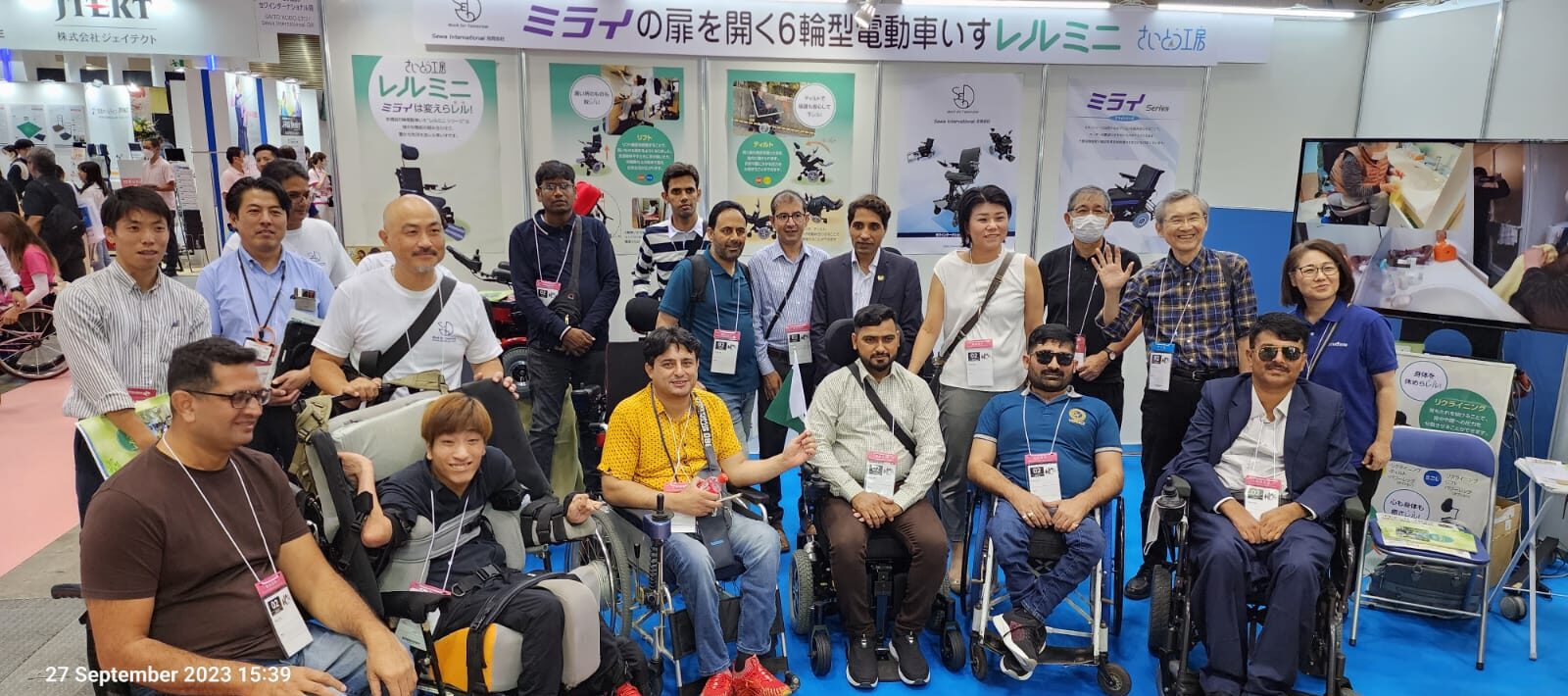
I also work as a consultant internationally and earn substantial professional income from there. Governments and international organizations invite me to advise on social systems and social entrepreneurship. For example, I have worked with Japanese government resources and contributed to disability-policy work following the Nepal earthquake and subsequent political transition. I emphasize this because I do not believe welfare should be built on pretending that people are poor or dependent. I believe in generating good income and using professional expertise to sustain social change. Social entrepreneurship and financial sustainability are essential if welfare systems are to survive.
Networking with State Officers who can Implement Change
When we think about the state, we need to distinguish between the government and state institutions. Governments are political and can be compromised. Ministers change, political priorities change, and political relationships can affect decision-making. But the implementation of policy ultimately depends heavily on state institutions and their officials.
Therefore, our strategy is to work with state institutions, bureaucracy and the institutions that actually possess the authority to implement change. Deputy commissioners, commissioners, secretaries, directors-general and other officials can be critical actors in translating policy into practice. A politician may announce a beautiful policy or make a strong statement, but if the relevant state institution does not implement it, the problem remains.
This is why we need to identify where actual decision-making power lies. If we want to improve society, we have to be practical and work with those who have the authority and resources to change systems. Sometimes change also occurs when decision-makers themselves encounter disability in their own families. When disability becomes personal, understanding can develop very quickly. A person who previously thought- this is not my problem, may suddenly realize that it is a social responsibility. This is one of the realities we have to work with when building systems of inclusion.
Issues of Low Awareness and the Commercialization of Disability
The greatest barrier to equity and inclusion is that society still does not properly understand disability. Even today, businesses operate around intellectual disability, dyslexia, and spinal-cord injury by promising families that they can “cure” or “fix” their children or relatives. Families may pay large amounts of money because they are given false hope. This is particularly damaging because families are often desperate for solutions. If someone presents a bottle of water and claims that it has a special healing effect, people may buy it because they want to believe in the possibility of recovery. The same principle operates in parts of the disability sector- give people a dream, and they may pay almost anything for it.
Religious or culturally familiar names can also be used to create trust. People may assume that a shop or organization is honest simply because it uses names associated with Medina, Mecca or other respected religious references. This is why disability services require stronger standards, evidence, accountability, and public awareness. Families need accurate information rather than false promises.
I also believe that autism should not be treated as a disease or as something that is inherently good or bad. Autism is a way of experiencing life- a difference in how a certain color is perceived by one human compared to another. Anyone who is alive and breathing and living with this condition can be part of our organization and can benefit from it. We have never believed that people should be labelled simply because they are autistic.
Unfortunately, autism can also become commercialized. Families are sometimes told that autistic children need to be normalized, medicated into passivity, exhausted through physical activity, or subjected to various treatments to eliminate their differences. Our approach is different. We are Muslims, and our understanding of human dignity and difference is informed by our values. A person should be supported to participate in life rather than treated as a problem that needs to be eliminated. The family, particularly mothers, is one of the most important external factors influencing the lives of children with disabilities.
Sometimes mothers are given unrealistic expectations that their child will become a celebrity or achieve some idealized version of success. Fathers may then spend large amounts of money on doctors and treatments in the hope of achieving that outcome. The deeper problem is a misunderstanding of difference. Difference does not mean good or bad.
At the same time, I have enormous respect for educated mothers who observe, understand, and advocate for their children. A mother who has lived alongside an autistic child from birth develops a form of knowledge that cannot simply be acquired from a textbook. She knows the child’s patterns, strengths, hopes, and difficulties. I consider these mothers a kind of new science. They have begun advocating not only for their own children but for other children as well, and we should value and support them.
The opposite is also true. Families can become a major barrier when relatives blame mothers or tell them that their child’s disability is punishment for something they did. Such beliefs create stigma and suffering. The government also faces capacity limitations. It may be able to build a beautiful facility, but a building alone does not create an effective support system. Human expertise, lived experience, family support, and appropriate services are essential.
Our Biggest Strength- Transparency and Accountability
At Milestone, we have deliberately developed a system in which financial authority is separated from the presidency. I am the president, but I do not have financial authority, and I do not personally know how much money is in the organization’s account. This is intentional. Financial authority belongs to the appropriate financial department, which has responsibility for managing finances. When authority is clearly assigned, there is ownership and accountability. When one person becomes the “god” of an organization and controls everything, corruption can begin. Milestone has had 14 presidents over approximately 33 years. I am the 14th president. The organization is therefore not built around one person’s personal authority.
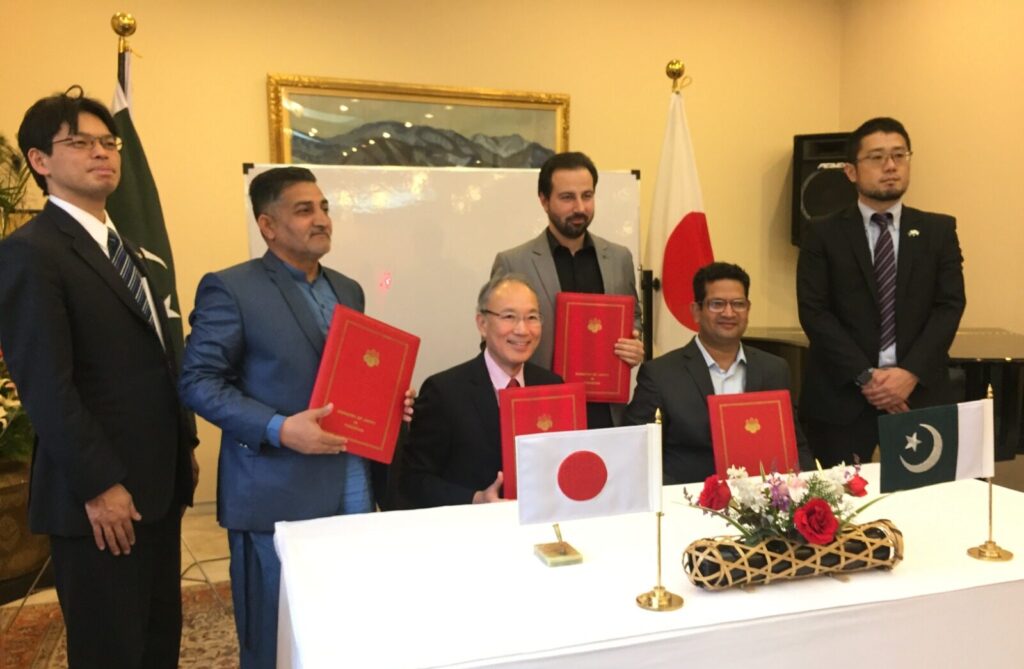
We have internal and third-party auditing, and our financial system is designed to be transparent. Fifteen years ago, auditing and monitoring were much more difficult. Today, however, Milestone has worked with major national and international institutions, including the World Bank; the Government of Japan; the Government of Pakistan; United Nations Educational, Scientific and Cultural Organization; United Nations Office on Drugs and Crime; National Counter Terrorism Authority Pakistan; the European Union; and the Japan International Cooperation Agency. These institutions do not work with organizations whose financial systems they cannot trust. In fact, Milestone has not traditionally had to go out and seek major projects. Institutions often approach us and ask us to work with them. That credibility has been built partly because of our financial transparency.
Regulatory requirements have also become stronger. Under Pakistan’s counter-terrorism and charity-regulation frameworks, organizations face scrutiny of their registration, people, finances and background. In Punjab, for example, organizations are required to register with the Punjab Charity Commission, and the registration process involves significant scrutiny. As a result, we have developed a system that is regarded internationally as financially transparent. New organizations sometimes come to learn from Milestone about how to manage their finances and build accountable systems.
The lesson is important for the wider welfare sector- good intentions are not enough! Welfare organizations need institutional checks and balances, separation of authority, independent auditing and transparent financial management.
Special Needs People as Decision-Makers for Policy Development
One of the strongest internal factors behind our success is the composition of our organization. There are 37 people involved, and 26 of them are persons with disabilities themselves, including myself. This is fundamental to our approach. If you establish an organization for labourers, labourers should be among its decision-makers. If you establish an organization for farmers, farmers should help make the decisions. Why should disability be any different?
Yet many large disability institutions are managed primarily by people without disabilities. How can they fully understand the lived experience of disability? Our success comes from the fact that- the people who live the subject are also the people making decisions about it. We therefore believe that organizations around the world should engage directly with us and with other organizations led by persons with disabilities when developing disability policies and solutions. Our experience is not limited to Pakistan. We have been invited to Cambodia, Sri Lanka, Nepal, and Mongolia, and I will be travelling to America in October this year to share our work and best practices for policy development. These invitations come because people recognize the expertise developed through our lived experience and long-term work.
This principle should be central to policy-making- people affected by a welfare issue should not merely be beneficiaries or consultees, they should be decision-makers.
Turning Welfare into an Economy of Dignity
The biggest emerging opportunity, in my view, is to stop thinking about welfare as something separate from the economy. Welfare must become economically sustainable. Consider a tandoor (clay oven). A tandoor provides food to people- it performs a welfare function; but it also generates income and supports a family. Why cannot welfare institutions develop sustainable economic models in the same way? We need to identify what services families need and create systems through which families can purchase services that sustain their children’s or relatives’ lives. Where families cannot afford those services, government tax revenues and social-welfare funds should help finance them.
This is very different from simply organizing activities to keep people occupied. We should not make children clap, dance, or perform merely to generate donations or income. Instead, we need independent-living systems that create jobs, services, and economic opportunities. For example, imagine a university student being employed for two hours a day to assist an elderly person with feeding, bathing, or changing clothes. That could provide the student with meaningful income while giving the elderly person dignified support. It could also create a culture of care.
In Japan, students engage in forms of care work as part of social and cultural life. We can develop similar systems in Pakistan. We have already started this work, and students are earning around PKR150,000-200,000 per month through care-related work, sometimes working only three or four hours a day. There is also a personal dimension. When you bathe someone or wash someone’s hands, you may begin to feel cleaner yourself. Caring for another person can produce a form of self-purification. This is not only morality- it is also human and social science.
Our religious traditions contain examples of this kind of voluntary care. There are traditions about Hazrat Abu Bakr Siddique secretly feeding a blind woman and Hazrat Umar discovering the practice and trying to reach her first. The lesson is that caring for others has long been part of our ethical tradition. This is why I say- welfare is also an economy, and care is also productive work. Without economic sustainability, no social system can survive.
I would go further: Islam does not teach dependency. It teaches self-sufficiency. There is a well-known tradition in which a person comes to the Prophet (pbuh) saying that he has nothing to eat, and instead of simply giving him food, he is given an axe and instructed to go and cut wood. The lesson is that people should be supported and encouraged to earn and become self-sufficient.
Therefore, we need to rethink our welfare systems. Government social-welfare departments, community development practitioners, and other stakeholders need to ask the following important questions (which they are not at the moment):
(i) How can public welfare funds be used to generate sustainable income, for all population groups including the special needs population?
(ii) How can small industries be established for special needs people?
(iii) How can productivity be increased?
(iv) What new businesses can be created for people with disabilities?
(v) How can employment be customized according to an individual’s abilities?
I call this customized employment.
If I cannot perform an existing job, the solution should not simply be to force me to adapt myself to that job. We should also ask whether we can create or redesign a job around my abilities. A human being is created for work, but jobs can also be created for human beings.
Let me give a practical example. A person with a C2-level spinal-cord injury may be paralyzed below the neck. However, he can operate the joystick of an electric wheelchair using his chin. We installed a Wi-Fi router on his electric wheelchair and developed a way for him to provide Wi-Fi access in public places. He can now go to a crowded public place or a park, provide internet access to around ten people at a time, and charge around PKR 500 per hour. If he works for five or six hours, he can earn approximately PKR 3,000-4,000 in a day and potentially PKR 100,000-150,000 per month. He is a person with severe paralysis, but through a technology-based needs assessment, we identified a service he could provide.
This is the kind of innovation we need: rather than asking only- What can this person do?, we should ask, What service does society need, and how can we design a way for this person to provide it? That requires creativity, technology, needs assessment, and a willingness to challenge conventional ideas about employment. Everyone should have the opportunity not simply to survive, but to enjoy life and earn an income.
My first recommendation for policy-makers is to clarify our understanding of the human lifestyle. Being different does not mean being bad. I do not have to walk using my legs. I can move using my hands. There are people who do not depend on their eyes to understand the world- they may use sound, touch, or technology. Deaf people can communicate through their hands and through languages that society has developed. We need to understand these different ways of living before designing services.
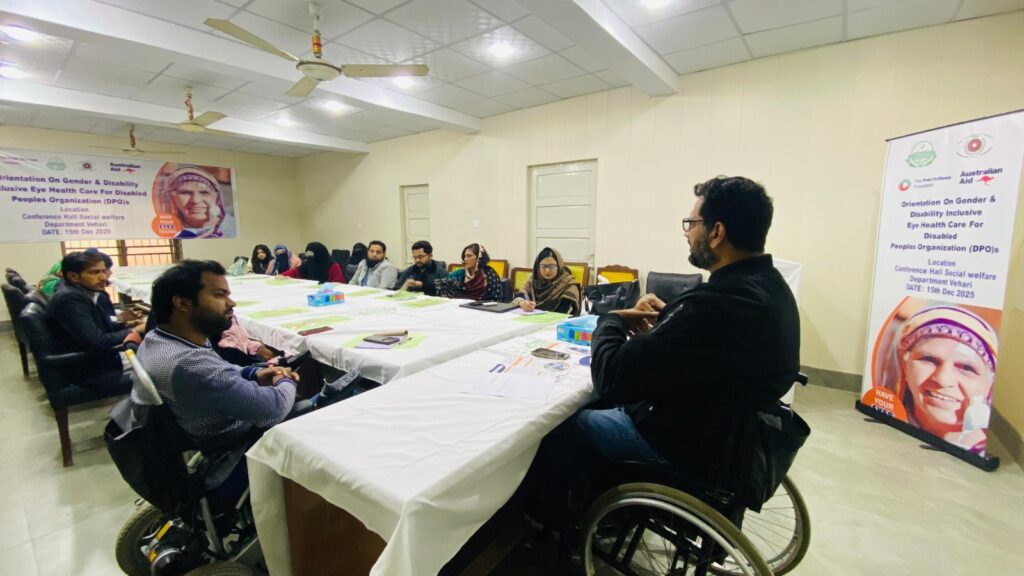
The second step is needs assessment. But needs assessment should not be conducted only by external experts. People who live with the condition should be listened to directly. In my view, at least 60% of the people involved in designing solutions should come from the lived-experience community, while the remaining 40% can include those responsible for implementation and professional support. Do not simply appoint someone as an “advisor” because they have a degree or a PhD. Academic qualifications are valuable, but lived experience produces knowledge that professionals may not possess.
There are very basic gaps in Pakistan that demonstrate this problem. For example, many doctors cannot explain to a wheelchair user how to safely transfer from a wheelchair to a commode. They may know the medical aspects of spinal-cord injury, but they do not necessarily know how the person actually lives. This is the gap between professional knowledge and lived knowledge. Until we close that gap, we cannot build a truly effective welfare system.
Our policies therefore need to move beyond doing things for people and towards designing systems with people. The people experiencing disability, poverty, ageing or other vulnerabilities should be central to defining the problem, designing the intervention, implementing it and evaluating whether it works.
That, ultimately, is how we move from welfare as charity to welfare with dignity, self-sufficiency, and economic citizenship.
To follow updates of Milestone Society for Special Persons, please visit:
https://www.youtube.com/@milestone99h
https://www.linkedin.com/in/milestone-society-for-the-special-persons-b256a9168
https://www.instagram.com/milestoneilc?igsh=OW85Ym5pMG41OG83
https://www.linkedin.com/in/shafiq-ur-rehman-milestone-51539026?utm_source=share_via&utm_content=profile&utm_medium=member_android
https://www.facebook.com/share/1HPHf5WCHD/